Many times, investors ask us what the important things are that we look for in any company when we decide to invest in it.
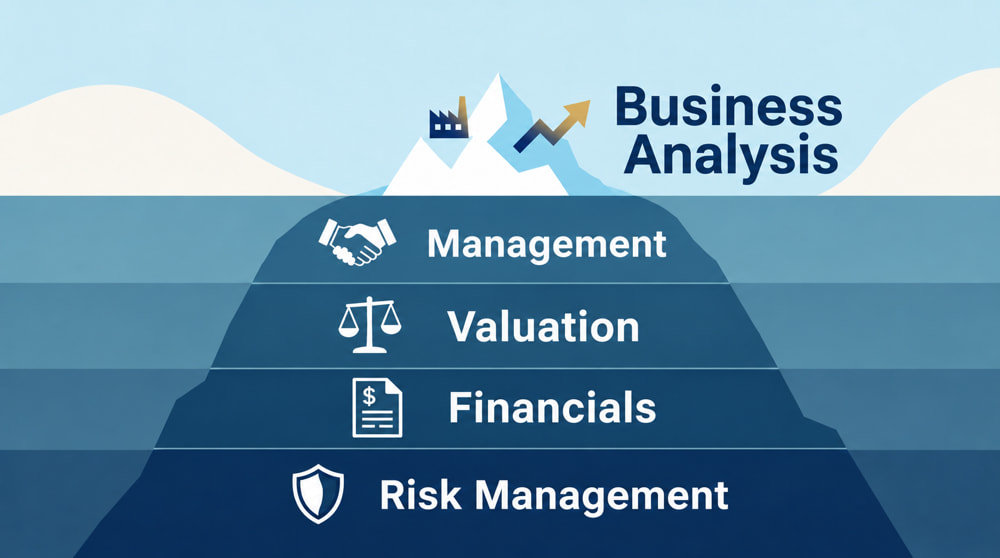
There are quite a few things that we look for, which we classify under segments like financial, business, management, and valuation analysis. However, out of these multiple things, in this article, we want to touch upon one of the most important aspects: assessing the balance sheet strength and “longevity” of a company.
How Balance Sheet Strength Ensures Company Longevity
Longevity indicates that the company has the wherewithal to survive, to stay alive, and to be there in existence when we reach the end of our multi-decade investing journey.
When a company gives indications of longevity, then it gives us peace in investing because we know that it will come out alive at the end of troubled times, it will outlive any recession, and it will be among the ones to benefit when good times arrive.
Why the Balance Sheet and Cash Flow Matter More Than Profits
Longevity comes from financial strength; however, this strength is assessed more in the balance sheet than in the profit & loss (P&L) statement. It is assessed more from cash flow from operations than from the earnings (PAT).
So, longevity basically means that a company is not dependent on the mercy of others for its existence. It is not dependent on lenders who might come asking for repayments when its business is down during a recession or might refuse to give more money when it needs it for growth.
Longevity also means that the company is not dependent upon shareholders for equity funding to survive troubled times, as they might refuse to give it more money when it needs it the most.
In simple terms, a company with longevity is like a debt-free person with her own house and a large emergency fund who does not fear a job/business loss because she knows that she is well-prepared to face any uncertainty with confidence.
Here, please note that financial strength does not always mean having zero debt. Modest, short-term working capital borrowing that a company repays regularly from its daily operations is normal in many businesses. The real risk comes when a company takes on large debt for aggressive expansion or relies on outside borrowing just to survive.
The Dangers of Growth Funded by Heavy Debt or Equity Dilution
When we notice companies that lack such financial strength and attempt to grow rapidly by taking on large debt or frequently going to shareholders for money through FPO (follow-on public offer), QIP (qualified institutional placements), rights issues, preferential warrants etc., then we become cautious. Such growth has its own risks.
Think of a company that relies on debt to build plants/assets, and if it is unlucky, which frequently happens in capital-intensive, cyclical sectors, the plant whose construction it started during an upcycle period gets completed when the downcycle period has arrived. Now, when the company wants to sell its products, earn money, repay debt, and benefit from its large investment, the demand for its goods crashes and no one is willing to buy them. If, now, the company does not have the financial wherewithal and liquidity, then it might face certain bankruptcy because the lenders will demand interest and principal repayment whether it is selling products or not. So, the company needs to be ready to sell its plants and other assets to survive.
For example, take the case of Bhushan Steel Ltd. The company started building a large integrated steel plant in Odisha in 2007 when the steel sector was in an upcycle. It took large loans for the same. However, as the construction of the project progressed, the steel industry turned into a downcycle and oversupply. Steel prices crashed, which was accentuated by cheaper imports from China. Bhushan Steel Ltd was burdened with a massive debt of over ₹56,000 cr, which it could not repay. The lenders took the company to the National Company Law Tribunal (NCLT) for bankruptcy in July 2017. Its share price fell sharply, and in May 2018, Tata Steel acquired a controlling stake in the company for about ₹35,200 cr leading to large losses for lenders and equity shareholders.
Read: Self Sustainable Growth Rate: Inherent Growth Potential of a Company
Similarly, if a company relies on equity funding for growth and survival, say for day-to-day cash burn in startups, then when funding dries up (called a funding winter), even running the day-to-day business becomes challenging. At these times, companies fire employees in large numbers, get sold at dirt-cheap valuations, and also realize that what they thought was a sure-shot successful business model was just another cash-hungry lottery bet.
Look at the example of Dunzo, a well-known delivery startup. Over the years, it raised about $470 million from investors like Reliance Retail that invested $200 million in January 2022. However, the company was burning heavy cash on day-to-day operations. It was losing up to ₹230 per delivery order. It reported a loss of ₹1,800 cr on revenue of just ₹226 cr in FY2023. Soon, the funding winter arrived and investors refused to give more money to Dunzo. It had to shut down its business in 2025 and Reliance Retail had to write off its entire investment (about ₹1,645 cr) in the company.
The Moral Hazard of Relying on Other People’s Money
Now, apart from financial risk, excessive reliance of companies on debt or equity dilution sometimes creates a moral hazard as well.
Promoters relying heavily on bank loans for their companies’ existence and growth, at times, get detached from their companies and start thinking of them as cows that need to be milked until the last drop for their personal benefit. The maxim, “If you borrow ₹1 lakh from a bank, then it is your problem. But, if you borrow ₹1,000 cr from a bank, then it is the bank’s problem,” reflects this moral hazard of large bank loans.
A recent example is Gensol Engineering Ltd, whose borrowings increased sharply from nil in FY2017 to over ₹1,260 cr by FY2024 as it took large loans from IREDA and PFC, including ₹664 cr meant specifically for buying electric vehicles. In 2025, the company defaulted to its lenders. In its April 2025 interim order (confirmed in July 2025), SEBI prima facie found that its promoters were running the listed company as a proprietary firm. As per SEBI, the money from loans meant for buying vehicles was allegedly used for promoters’ personal benefit, including ₹42.94 cr toward a luxury apartment (The Camellias) in Gurugram and personal luxury items like a ₹26 lakh golf set, while lenders and public shareholders lost their money.
Read: How Promoters benefit from Related Party Transactions
The same is true when promoters rely on shareholders for giving them money for the existence and growth of their companies. In the startup world, there are numerous instances where founders fabricated accounts and data and deceived investors to raise more money, or siphoned off the company’s money for their personal benefit.
For example, consider the case of GoMechanic, a car servicing startup that raised about $62 million from well-known investors like Sequoia and Tiger Global. At one point, the company reached a valuation of $285 million. Later on, an audit flagged serious financial irregularities, including inflated revenue and fictitious partner garages. In January 2023, co-founder Amit Bhasin publicly admitted to “grave errors in judgment” in financial reporting. In March 2023, the company was sold off in a distress sale where all equity investors had to write off their investment.
This risk is not limited to startups or unlisted companies. The publicly listed space also has multiple instances where promoters siphoned off the money raised by companies from public shareholders via rights issues, QIPs, preferential warrants etc.
Take the example of Mishtann Foods Ltd. It withdrew its planned ₹150 cr rights issue and launched a smaller issue of under ₹50 cr, which allowed it to avoid stricter regulatory scrutiny. In its December 2024 interim order (pending final adjudication), SEBI prima facie observed that the promoters allegedly siphoned off ₹49.82 cr raised from the rights issue and diverted another ₹47.10 cr through fictitious transactions. SEBI barred the company from raising public funds and directed it to recover this money from its promoters and group entities.
How to Check Balance Sheet Strength Using Long-Term Annual Reports
So, how do we, as investors, handle these risks of relying on outside capital?
For this, we take guidance from a statement one of the investors made to us: “A debt-free company can’t go bankrupt.” And another one: “Other people’s money is the root of most corporate frauds. A promoter running the company within its own means is much less likely to do accounting frauds.”
Therefore, when we analyse any company, we read its history (annual reports of all the listed companies from about FY1997 onwards are available for free on the BSE website). During our analysis, one of the aims is to find out how the company has reached its current stage. Has it shown financial conservatism or financial recklessness during its journey?
If over the last 25-30 years, the company has grown by relying on its earnings, avoided the trap of outside capital like excessive debt and repeated equity dilutions, and reached its current stage by successfully navigating numerous recessions and downcycles on its way (2000s IT bubble, 2008 recession, 2014-16 Eurozone crisis, Demonetization, Covid crisis etc.), then we know that the company has longevity.
This is why we are predominantly balance-sheet investors who want to make sure that the company has not gone overboard in its quest for growth “at all costs” in a way that might put its survival under risk in the next downturn, which is certainly going to come. The question of the next down phase is not of “if” but of “when.”
While checking this financial strength over a long period for non-financial companies (excluding banks and NBFCs), we look at a few simple numbers. We check whether the company has kept its debt low compared to its equity (low Debt-to-Equity ratio) and whether its operating profits easily cover its interest payments (comfortable interest coverage). We also compare its 10-year cumulative net profit (PAT) with its 10-year cumulative cash flow from operations (CFO) to make sure that the reported profits are actually turning into real cash in the bank instead of getting stuck in receivables or inventory.
Read: How to do Financial Analysis of a Company
Once we are certain of this strength and longevity on the balance sheet, we proceed with other critical parameters like management and valuation analysis.
Only after a company passes all these checks does it enter our portfolio. Thereafter, we hope that, over the coming decades, its promoters will create good wealth for all the stakeholders, and we will piggyback on them on our path to financial independence.
Read: Why Business Analysis Alone Is Not Enough in Stock Investing
All the best for your investing journey!
Regards,
Dr Vijay Malik
P.S.
- Subscribe to Dr Vijay Malik’s Recommended Stocks: Click here
- Bengaluru “Peaceful Investing” Workshop | 31 Jan 2027: Register Here
- To learn stock investing through videos, you may subscribe to the Peaceful Investing – Workshop Videos
- 25% savings on buying our Stock Analysis Excel Template and all ebooks together: Analysis Package: Excel Template + All eBooks (25% savings)
- To download our customized Stock Analysis Excel Template for analysing companies: Stock Analysis Excel
- Learn about our stock analysis approach in the e-book: “Peaceful Investing – A Simple Guide to Hassle-free Stock Investing”
- To learn how to do business analysis of companies: e-book: Business Analysis Guide
- To pre-register/express interest in a “Peaceful Investing” workshop in your city: Click here
Disclaimer
I, Vijay Malik, am a SEBI-registered Research Analyst (Regn. No. INH100008364). This article is for educational purposes only and does not constitute investment advice or a recommendation to buy or sell any securities. Investors should do their own research before making any investment decisions.
I, or my immediate relatives, do not have any financial interest in the companies discussed as on the date of publication of this article, nor do we hold one per cent or more of the securities of such companies at the end of the month immediately preceding it. I do not have any material conflict of interest and have not received any compensation or other benefits from the companies or any third party in relation to this article during the 12 months preceding its publication. I have not served as an officer, director, or employee of the subject companies, nor have I been engaged in market making activity for them.